How to Respond to Fake Police Calls: An Anti-Fraud Guide for Foreign Nationals |
| Release time:2026-06-16 | Number of views: |
During their study, work, or daily life in China, some foreign nationals may receive calls claiming to be from the "police," an "embassy or consulate," or other "government authorities." The caller may allege that the recipient is involved in a criminal case, has visa-related issues, or that their personal information has been misused, and urge them to cooperate immediately.
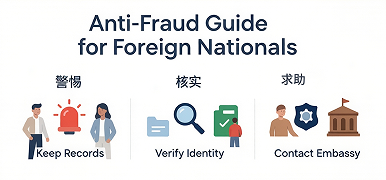
However, such calls may be fraudulent. Please remain vigilant. Be Alert to the Following Warning Signs If the caller does any of the following, exercise extreme caution: Claims that you are involved in a criminal investigation I.Requests that you continue communication through social media applications such as WeChat or WhatsApp; II.Asks for your passport number, bank account details, or verification codes; III. Instructs you to transfer money to a so-called "safe account"; IV.Requests that you download unfamiliar applications or enable screen sharing; V.Threatens deportation, account freezes, or immediate legal action; VI.Demands that you keep the matter secret from others. Remember: Do Not Trust Blindly and Do Not Transfer Money When receiving suspicious calls, remain calm and avoid making hasty decisions out of fear. Please remember to: ✓ Verify the caller's identity independently; ✓ Never disclose personal information, bank account details, or verification codes; ✓ Do not transfer money to unfamiliar accounts; ✓ Avoid downloading applications from unknown sources; ✓ Seek assistance from friends, schools, or employers if you are unsure. What Should You Do If You Suspect Fraud? If you believe you have encountered fraud, take the following actions immediately: I. End all communication with the suspected scammer; II. Preserve relevant evidence, including call logs, chat records, and transaction receipts; III. Report the incident to the police by calling 110 as soon as possible; IV. Contact your bank or payment service provider for assistance; V. Reach out to your embassy or consulate in China if necessary. Friendly Reminder Legitimate law enforcement authorities will not ask you to transfer money to a "safe account" over the phone, nor will they request your payment passwords or verification codes. Staying informed and vigilant is one of the best ways to protect your property and legal rights. When dealing with unfamiliar calls, think twice before taking action. This article is intended solely for legal education purposes and does not constitute legal advice. For specific cases, please consult a qualified lawyer or the relevant authorities. All articles reproduced on this website are copyrighted by the original author, and the contents are for study and reference only, not for commercial use, and some of the pictures are originated from the Internet. If in the process of forwarding involved in copyright issues, please contact us in a timely manner, we will be dealt with appropriately as soon as possible. |
| Last:Can You Lend Your Bank Card, WeChat Pay, or Alipay Account to Others? Legal Risk Next:AI Image Authorization: Illegal Employment? Students Must Read |

13 / F, block B, Jiahe center, Cuihua South Road, Xi'an, Shaanxi
goshaanxi@163.com
4008790508